Lens implant surgery using icl biotech technology offered by snu eye clinic vision experts
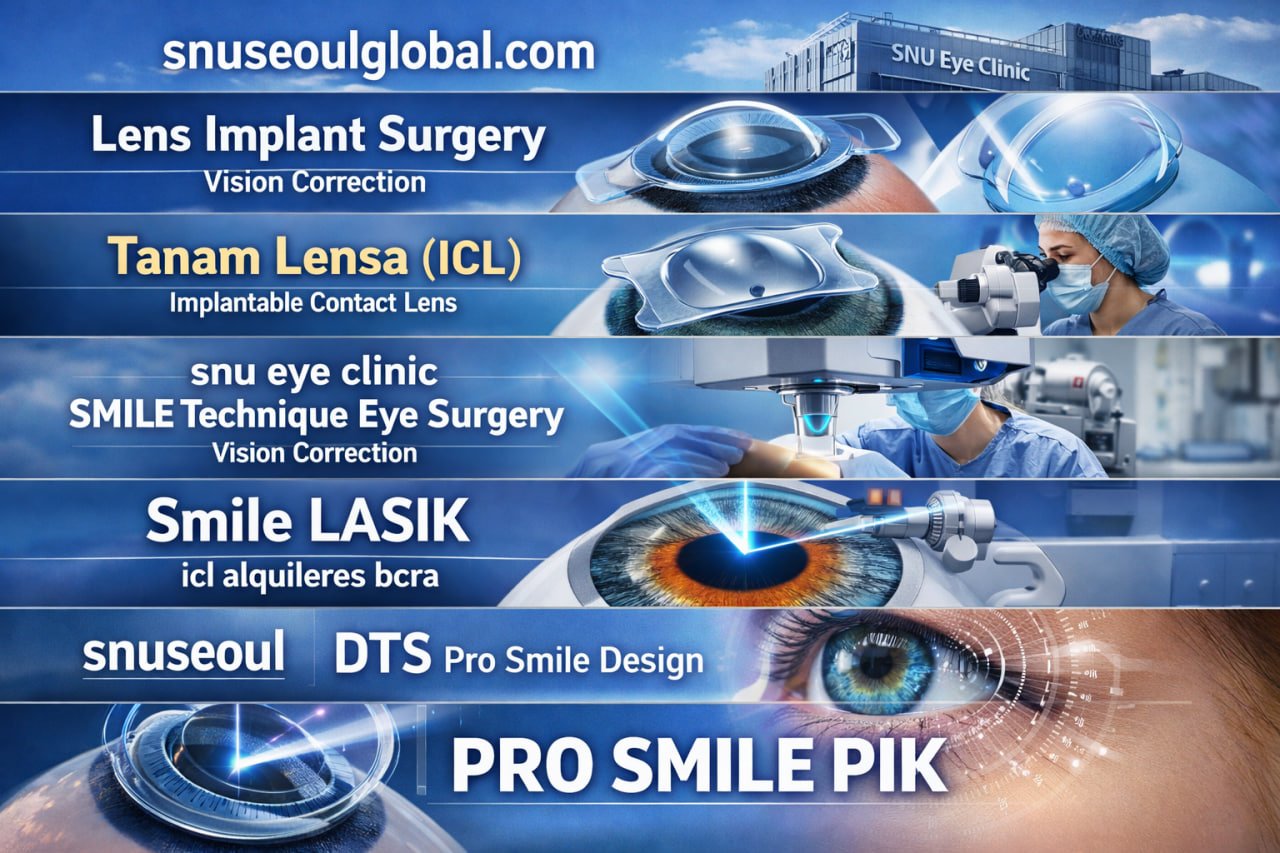
Advancements in Vision Correction and Lens Implant Technology
Modern ophthalmology has revolutionized the treatment of refractive errors, allowing patients to restore clear vision through innovative surgical solutions. While glasses and contact lenses have long been traditional methods for correcting vision problems, surgical technologies now offer more permanent alternatives. Among these innovations, Lens Implant Surgery has emerged as a highly effective solution for individuals who cannot undergo traditional laser procedures.
SNU Eye Clinic in Seoul has become widely recognized for integrating advanced technologies with university-level medical expertise. Specialists at the clinic use state-of-the-art diagnostic tools and surgical systems to provide personalized treatment plans for each patient. Through the integration of icl biotech technology and innovative surgical approaches, the clinic delivers precise and safe vision correction solutions.
Patients worldwide search for procedures such as 视力矫正, Koreksi Penglihatan, and Лазерная коррекция зрения when exploring modern eye treatments. These searches reflect the global demand for reliable vision correction methods that can restore visual clarity while maintaining eye health.visit for more details 라식 vs 라섹 디시.
Understanding Implantable Collamer Lens Surgery
Implantable Collamer Lens surgery, commonly known as ICL, is a revolutionary procedure designed for patients with moderate to severe refractive errors. Unlike traditional LASIK surgery, which reshapes the cornea using laser technology, Lens Implantation involves placing a specialized lens inside the eye to correct vision.
The procedure uses advanced intraocular lenses known as Интраокулярные линзы, which are carefully inserted between the iris and the natural lens. One of the most recognized versions of this technology is the Visian ICL V4C FDA approved lens. This lens design includes a central port that allows natural fluid circulation in the eye, improving safety and reducing the risk of complications.
Patients researching procedures online often encounter terms such as icl-operation komplikationer, icl 経過, and icl รีวิว while learning about the treatment process and recovery. Clinical studies have shown that the ICL procedure delivers exceptional visual outcomes and high patient satisfaction rates.
This surgical method is especially suitable for patients with thin corneas, high myopia, or those who are not candidates for traditional laser procedures such as 라섹 or LASEK bytkowski techniques.
The Role of ICL Biotech Innovations in Eye Surgery
Technological advancements from icl biotech have significantly improved the safety and effectiveness of implantable lens procedures. The Collamer material used in ICL lenses is biocompatible and designed to work naturally with the eye’s internal environment.
Unlike older intraocular lenses used primarily for cataract surgery, ICL lenses are designed specifically for refractive correction. The procedure is reversible, meaning the lens can be removed or replaced if necessary. This flexibility makes Lens Implant Surgery an appealing option for patients who want long-term vision correction without permanently altering the cornea.
International patients searching for treatments like Имплантация линз, Ласек, and Хараатэглэхмэсзасал often discover that Korean clinics are leaders in implantable lens technology. The SNU Eye Clinic uses high-precision imaging systems to ensure that each lens is carefully customized for the patient’s eye structure.
Surgeons rely on advanced measurements and digital planning tools such as dts pro smile design systems to determine the optimal lens size and placement. This detailed planning process helps achieve stable and predictable visual results.
Comparing Lens Implant Surgery with Laser Vision Correction
Patients considering vision correction surgery often compare different procedures to determine which option best suits their needs. While laser procedures such as Smile lasik and sst lasek remain highly effective for many individuals, they are not suitable for everyone.
Laser surgery works by reshaping the cornea, which requires sufficient corneal thickness. Patients with extremely high prescriptions or thin corneas may not qualify for procedures such as Smile pro or traditional LASIK. In these cases, Lens Implantation offers an excellent alternative.
The ICL procedure provides several advantages. Because the cornea remains untouched, the structural integrity of the eye is preserved. Visual quality is often exceptional, particularly in low-light conditions. Many patients report improved night vision compared with older laser techniques.
Online discussions comparing 라식 vs 라섹 디시 highlight the differences between various laser procedures. However, implantable lenses offer a completely different approach by correcting vision internally rather than reshaping the cornea.
Global Interest in Korean Eye Surgery Expertise
South Korea has become a major center for medical tourism, particularly in the field of ophthalmology. Patients travel from various countries seeking advanced procedures such as 全飞秒 laser surgery and ICL implantation.
International search trends include phrases such as lasik eye surgery austin, lasik eye surgery texas, and davis vision lasik. While these procedures are widely available worldwide, Korean clinics often attract international patients because of their advanced technology and highly specialized surgeons.
The SNU Eye Clinic is known for combining academic research with clinical practice. Surgeons frequently participate in international conferences and research programs to stay at the forefront of ophthalmic innovation.
Patients researching treatment options may also encounter unexpected search phrases like icl alquileres bcra, icl enero 2025, or buy icl fincorp shares while exploring the topic online. Although these terms are unrelated to medical procedures, they reflect the widespread recognition of the ICL acronym across different industries.
Patient Care, Evaluation, and Surgical Planning
Before undergoing any vision correction procedure, patients must undergo a comprehensive eye examination. Diagnostic evaluations include corneal mapping, refractive error measurement, and detailed ocular health assessments.
Tests such as ตรวจสายตา and ตรวจตา are essential steps in determining the most appropriate treatment option. Doctors also evaluate the patient’s medical history, lifestyle needs, and visual goals.
Once a patient qualifies for Lens Implant Surgery, surgeons use advanced planning software to determine the correct lens size and positioning. During the procedure, the lens is inserted through a small incision and carefully positioned behind the iris.
Recovery is typically fast, with most patients experiencing improved vision within a few days. Post-operative monitoring ensures that the lens remains stable and that intraocular pressure remains within safe limits.
The Future of Implantable Lens Vision Correction
The future of vision correction technology continues to focus on precision, safety, and personalized treatment. Implantable lens technology continues to evolve with improvements in lens materials, surgical techniques, and diagnostic systems.
Innovations from icl biotech are expected to enhance lens performance while further reducing surgical risks. As research advances, surgeons will continue to refine treatment methods that combine laser technology and implantable lenses.
Clinics that integrate research, patient education, and advanced surgical equipment are shaping the next generation of eye care. Through continued innovation and patient-centered care, modern ophthalmology is helping individuals around the world achieve clear and lasting vision.